
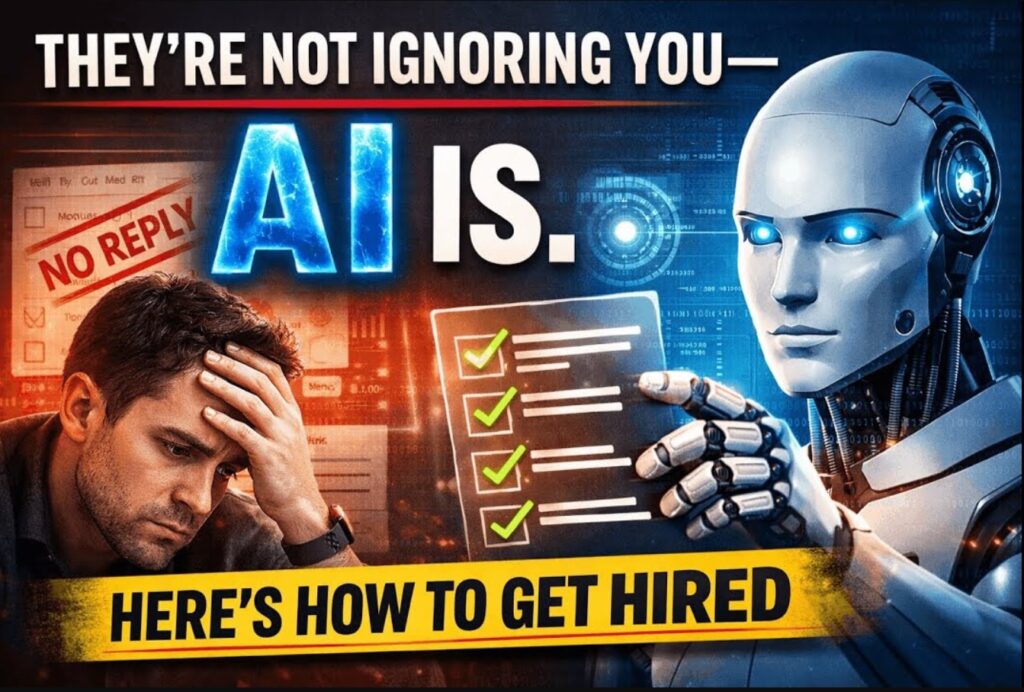
Why Your Job Applications Are Being Overlooked
By 2026, the majority of organisations will rely on Artificial Intelligence (AI) and Applicant Tracking Systems (ATS) to manage high volumes of applications.
If you are submitting high-quality applications yet receiving little or no response, the issue may not be your experience, skills, or suitability for the role.
This means that before a recruiter ever reviews your CV, it is first evaluated by an algorithm programmed to assess
relevance, structure, and alignment with the job description. Understanding how these systems work is no longer optional, it is essential for modern job seekers.
The Reality of Job Applications in 2026: AI Is the First Decision-Maker
In today’s recruitment landscape, AI systems perform the initial screening by:
- Scanning resumes for role-specific keywords and competencies
- Evaluating formatting, layout, and readability
- Matching candidate profiles against job descriptions and success criteria
- Ranking applicants based on predicted job fit
As a result, strong candidates are often filtered out—not because they lack capability, but because their applications are not
optimised for AI interpretation.
Key Insight: It’s Not About Who You Know—It’s About What the AI Sees
A common misconception is that networking alone guarantees success. While relationships still matter, AI determines who
gets seen first.
Your resume must clearly communicate:
- Relevant skills using industry-aligned terminology
- Measurable achievements rather than generic responsibilities
- A structure that allows AI systems to accurately parse your information
In essence, your application must be written for both machines and humans—clear enough for algorithms and compelling
enough for recruiters.
Myth Busted: Recruiters Are Not Always the First to Read Your CV
One of the most persistent myths in job hunting is that recruiters manually review every application. In reality:
By 2026, human review typically begins only after AI screening is complete.
This makes understanding AI-powered recruitment tools a critical career skill. Candidates who adapt their applications
accordingly gain a significant competitive advantage.
What This Guide Will Help You Achieve
This resource is designed to equip you with practical, evidence-based strategies to:
- Optimise resumes and cover letters for AI screening tools
- Use the right keywords without keyword stuffing
- Apply effective formatting that improves ATS readability
- Align your experience with role requirements in a measurable way
- Increase your chances of progressing to interviews in competitive job markets
Final Thought: Adaptation Is the New Career Advantage
The job search process has evolved, and successful candidates are those who evolve with it. Mastering how AI evaluates
your application is not about “gaming the system”—it is about presenting your value clearly, accurately, and strategically in a digital-first recruitment environment.
Those who understand the system will stand out. Those who do not may continue to be overlooked—despite being highly qualified.